Spring Reverb: The Classic Electro-Mechanical Reverberation System
The Music Telegraph| 입력 : 2026/07/24 [15:01]
|
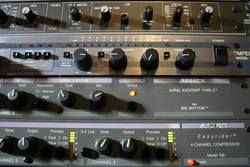
▲ Spring Reverbration Units on TipTop Modulars
© Wikimedia Commons (photo by George P. Macklin)
|
Spring Reverb: The Classic Electro-Mechanical Reverberation System
Spring reverb is one of the earliest and most recognizable artificial reverberation technologies used in music production. Long before digital signal processing became commonplace, engineers developed spring reverb as an electro-mechanical solution for creating a sense of acoustic space. Even today, its distinctive character remains popular in guitar amplifiers, vintage studio equipment, and software emulations.
At its core, a spring reverb unit is an electro-mechanical device that converts an audio signal into physical vibrations. An input transducer, often referred to as a contact speaker or driver, transfers the incoming sound into one or more metal springs. As the vibrations travel through the springs, they are reflected and dispersed, creating a complex pattern of delayed echoes.
At the opposite end of the spring assembly, a contact microphone, or pickup transducer, captures these vibrations as they pass through the springs. The pickup converts the mechanical movement back into an electrical audio signal. Because the vibrations travel at different speeds and reflect multiple times within the spring, the resulting output contains numerous closely spaced delays that blend together to produce the characteristic reverberation effect.
Unlike digital reverbs designed to simulate natural acoustic environments with high realism, spring reverb has a unique tonal signature. Its sound is often described as warm, metallic, bright, and slightly resonant, with a distinctive "boing" or "twang" that becomes especially noticeable when the springs are physically disturbed. These characteristics have made spring reverb an iconic component of surf rock, blues, country, reggae, dub, and many vintage recording styles.
Many classic guitar amplifiers, particularly those produced during the 1960s, incorporated built-in spring reverb tanks to give electric guitars a spacious and expressive sound. Recording studios also employed standalone spring reverb units to add depth and atmosphere to vocals, keyboards, drums, and other instruments.
Spring reverb remains an enduring example of how mechanical engineering and audio technology combined to shape the sound of recorded music. Its simple yet ingenious design continues to inspire musicians and engineers who appreciate its unique blend of vintage warmth, texture, and character.
< Copyright ⓒ The Music Telegraph :: Prohibit reprinting and redistribution >
COMPANY LINK
- 1BITDRAGON
- 1BITDRAGON is a music creation software super easy to use, simple, instant and fun. Create a basic melody in a few steps, compose a great song in a few minutes. Developed in France.
- 1bitdragon.com
- Ablaze
- Amsterdam-based indie brand dedicated to developing the next generation of vocal plugins for modern metal screamers and metal producers, founded by metal vocalist Jochem de Jong
- www.ablazeaudio.com/
- Accentize
- German company which provides cutting-edge audio plugins based on machine learning techniques
- www.accentize.com
- Accurate Sound
- Canadian professional calibration service provider and audio software developer offering digital room correction calibration services and stereo & multichannel convolver software
- accuratesound.ca
- Adam Monroe Music
- Founded by a freelance musician and composer Adam Monroe, offering sample libraries, VSTs, and music plugins based in United States.
- adammonroemusic.com
- Advanced Soundware
- American audio plug-in developer offering tools to craft, refine, and perfect MIDI realizations with an ease and realism never before possible
- advancedsoundware.com
- Apollo Sound
- Creative sample library & sound design company dealing with various vintage and modern audio devices based in Kiev, Ukraine
- www.apollosound.net
- Aqeel Aadam
- American composer, sample smither, and plug-in developer, creating audio tools for the curious and open-minded.
- aqeelaadamsound.com/
- Audio Assault
- Mexico-based audio plug-in developer that creates “killer” audio plug-ins
- audioassault.mx
- Audio Brewers
- Pioneer developers of Sample Libraries and Virtual Instruments Recorded, Mixed, and Delivered in native Ambisonics based in Greece.
- www.audiobrewers.com
- Audiobulb
- British exploratory music label releasing creative artist works as well as virtual instruments and audio hardware
- www.audiobulb.com/index.html
- Audivor
- Brand-new American software instrument developer providing composers and music producers with innovative tools that simplify and enhance the music creation process
- audivor.com/
- AURA Plugins
- Finnish software development company offering Editor and Librarian software for hardware synthesizers and hardware effect units
- auraplugins.com
- Aurora DSP
- Polish audio plug-in developer focusing on creative guitar sounds
- auroradsp.com
- Backpullver Software
- Bulgarian software development company offering iOS applications for electronic music composition
- www.vatanator.com/
- Bansaw Crown Music
- American plugin developer and sound design company, offering innovative and unique sound design tools
- bansawcrown.com/
- Black Salt Audio
- Canadian audio plug-in developer offering intuitive music tools that inspire creative endeavors for music and sound making
- www.blacksaltaudio.com
- Bunker Samples
- Danish developer exploring the power of sampling to create virtual instruments that bend the rules.
- bunkersamples.com
- Cinematic Composing
- Los Angeles-based institution dedicated to training students in orchestral composition and film scoring
- www.cinematiccomposing.com/
- Composing Tutorials Online
- The German-born media composer Dirk Ehlert owned company offering tools, resources and learning materials for composers and noise enthusiasts
- home.composingtutorials.com
- ConnectionOpen
- Online communication platform developer providing real-time creative collaboration experiences over the internet based in Nevada, United States
- www.connectionopen.com
- Cool WAV
- American sound design company offering presets, sample packs, and plug-ins that fit a range of music styles
- coolwav.com
- Critical Tune
- Italian virtual instrument and sound library developer focusing the realization of a wide range of samples from vintage synths and keyboards
- criticaltune.com
- Datacode Records
- Canadian sound design and sample pack production company offering finest techno and house sample libraries
- datacoderecords.com
- Deadline Entertainment
- German audio software company founded by the rock band B.D.S.M.(Big Dick Sex Machine) to revolutionize Rock n Roll entertainment
- www.deadline-entertainment.com/en
- Devicemeister
- German audio software developer offering powerful and versatile polyphonic step and modulation sequencers
- devicemeister.com
- Diginoiz
- Polish sound design and VST instrument developer company offering innovative sample libraries and virtual instruments
- diginoiz.com
- Digital Sound Factory
- American virtual instrument development company offering world renowned sounds of legendary E-MU sound modules
- www.digitalsoundfactory.com
- dSONIQ
- Russian software developer offering innovative headphone-optimization plugins based on advanced psychoacoustic research
- www.dsoniq.com
- Ear Candy Technologies
- Mexican developer of audio plug-ins known for its innovative tools that expand creative possibilities, offering products based on AI and music production research
- earcandytech.com/
- Echograin
- Austrian sound design company founded in 2022 and Tranzwave is its debut product featuring advanced wavetable synthesis based on legendary Ensoniq Fizmo
- echograin.io/
- Edu Prado Sounds
- Ireland-based musician, producer, and composer Edu Prado owned sound-design company that offers NEW sounds
- sounds.eduprado.com
- Elastic Music
- American audio sample creator, founded by composer and multi-instrumentalist Nick Torreta, specializing in the Extended Techniques series of classical instruments to create otherworldly sounds
- www.nicktorretta.com/sample-libraries
- Elementary Sounds
- Estonian Avant-Garde virtual instruments developer offering artistically designed plugins with original texture and specific moods
- elementarysounds.com
- Evergreen Audio Design Group
- American audio software development company founded by a former software architect at Avid offering sophisticated media tools to enhance workflows and customized softwares based on individual client's needs
- evergreenaudiodesigngroup.com
- Exonic UK
- British software developer offering unique, inspiring and useful plugins, each a result of a singular, specific vision.
- www.exonicuk.com
- Focus Fidelity
- New Zealand-based audio software developer offering softwares that effectively calibrate audio playback for loudspeakers and room acoustics resulting in higher fidelity
- www.focusfidelity.com
- Free To Use Sounds
- American royalty-free sound library provider capturing professional quality field recordings in various locations around the world
- www.freetousesounds.com
- Function Loops
- Israeli sound design company offering ultimate resources for DJs, producers, and musicians
- www.functionloops.com
- Ghost Audio Factory
- New Canadian developer of audio plug-ins for amateurs and professionals
- ghostaudiofactory.com
- Ginger Audio
- Israeli audio software development company offering software-based live audio mixer and control room based on GroundControl technology of powerful routing and monitoring capabilities
- gingeraudio.com
- guk.ai
- Software development company offering an AI-powered software synthesizer based in Amsterdam, The Netherlands
- guk.ai/sistema-ai-synthesizer
- Handcrafted Audio
- Swiss sampling company specializing in high-end boutique instruments that inspire, focusing on cutting-edge sound quality and expressivity
- handcrafted.audio/
- Harvest Plugins
- Software developer creating new, exciting and unique music making tools based in California, United States
- harvestplugin.com
- IBallRoad Audio
- American audio plug-in developer making audio plug-ins based on complex mathematics for transferring analog electronic to digital audio
- iballroad.audio
- Imaginando
- Portuguese audio-software developer creating inspiring musical experiences by combining music with technology
- www.imaginando.pt
- Inouï Samples
- Virtual Instrument Developer with the aim of pushing forward artistic creations based in France
- www.inouisamples.com
- Jasl-audio
- Virtual instrument developer founded by Dutch film composer Jochem Weierink, specializing in expressive Kontakt instruments for cinematic composers
- jasl-audio.com
- K-Devices
- French software company that designs and develops innovative tools for music creation since 2010.
- k-devices.com
- Kalide
- American music technology company creating playful products that change how we make and interact with music
- www.kalidemusic.com
- Klanghabitat
- Manufacturer of high-end audio equipment designed in Sweden and manufactured in Germany.
- www.klanghabitat.com
- LiveLoop
- The Amsterdam-based composer and software developer Josep Garcés owned audio software company offering a professional looping software for live music performance
- www.liveloop.live
- Lú Music Technology
- Belfast-based audio innovative company dedicated to unlocking harmonicity by educating, enabling, and empowering those curious to understand harmonicity
- www.lumusictech.com/
- Lugert Publishing
- German music publishing company offering innovative music softwares such as 'Forte' notation software and 'ScanScore' sheet music scanning software for musicians, students, and teachers.
- www.fortenotation.com/en/
- Majetone
- London-based developer known for unique and creative sound design and plug-ins, offering groundbreaking drum-based virtual instruments
- majetone.com/
- Martinic
- Dutch company developing software instruments and effects based on its state-of-the-art circuit modeling process known as ACE (Advanced Circuitry Emulation) technology
- www.martinic.com
- Master The Score
- Online educational platform founded in 2021 by Austrian composer Nikolaus Daim offering high quality online courses covering any imaginable topics about media music production
- www.masterthescore.com
- Mathew Lane
- Innovative spatial processor plug-ins and hardware manufacturer based in Belgium
- www.mathewlane.com
- Melda Production
- Software developer creating advanced tools for music production and audio processing based in Prague, Czech Republic
- www.meldaproduction.com
- Molecular Bytes
- Innovative Music and Audio Software Developer based in Germany
- www.molecularbytes.com/mbcms/
- Mozaic Beats
- American company developing softwares for music theory such as AutoTheory and Chord Prism
- www.chordprism.com
- Naroth Audio
- The Los Angeles-based sampling company offering a unique cinematic percussion tool that generates ‘New Sound of Rhythm’
- www.narothaudio.com
- Nuances Controller
- Professional-grade handmade MIDI CC controller, specifically designed by a French composer to meet the needs of professional composers and producers
- nuancescontroller.fr
- Oeksound
- Finnish audio plug-in company bringing innovative sound for mixing and mastering based in Helsinki
- oeksound.com
- Otto Audio
- American audio software developer offering premium audio weapons for heavy music
- ottoaudio.net
- Penka's Masterclass
- 12-week intensive course in soundtrack analysis and demo scoring, taught by Grammy-winning Hollywood composer Penka Kouneva
- penkamasterclasses.com/
- Pinkertone
- Canadian brand-new sound design company offering ultimate hybrid-style Kontakt sample libraries founded by ASCAP award-winning music composer Benjamin Pinkerton
- pinkertone.com
- Prima Materia Audio
- French sound design company offering professional Frenchcore, Hardtechno, and Hardcore audio samples
- www.primamateriaaudio.com
- Quiet Art
- New Zealand audio plug-in company creating unique but must-have products for people in the music and film industries
- quietart.co.nz
- r-loops
- Polish sound design company producing innovative sound libraries for producers and musicians
- r-loops.com
- Safari Pedals
- Israeli company based on stomp pedals for line level and microphones as well as VST, AAX and AU plug-ins with a fresh new approach.
- safaripedals.com
- Schulz Audio
- Innovative and User-friendly Audio plug-in developer based in Berlin, Germany
- schulz.audio/products/
- Silence+Other Sounds
- Italian boutique sound design company creating evoking, vivid, unmistakable sound design for the wide community of composers, filmmakers, game developers and editors
- silenceandothersounds.com
- Sinuslabs
- Berlin-based virtual instrument developer studio creating unique and innovative music tools in the open
- sinuslabs.io
- Six String Audio
- Audio software developer based in Germany, specializing in creating the most authentic virtual guitars
- sixstringaudio.com/
- Slooply
- A new platform-based service designed for musicians that provides vast numbers of high-quality sound samples at affordable prices based in Poland.
- slooply.com
- Song Noter
- Music collaboration app with a new way of communication for musicians developed by Tomas Brhel based in Czech Republic
- songnoter.com
- SonicProjects
- Swiss research-base virtual instrument developer offering top-notch digital emulations of old classic analog synthesizers.
- www.sonicprojects.ch/
- Soultree Audio
- Finnish sample instruments developer offering versatile, high-quality tools for composing and arranging vocal music with lyrics based on human voice digitalization research
- www.sielunpuu.net/en/st-instruments
- Sound Magic
- Founded in 2007, One of the Primary Pioneers in Virtual Instruments and DSP Software based in Beijing, China
- neovst.com
- StageBox Software
- Canadian software developer founded by 3x Grammy-nominated composer Matt Robertson, offering powerful hosting software for live music performance
- www.stageboxsoftware.com/
- Swar Systems
- Software company specialized in Indian music and virtual Indian instruments offering the most realistic virtual Indian instruments based in Switzerland
- www.swarsystems.com/index.php
- TAQS.IM
- American world music specialized audio software developer offering world music synthesizers, world music libraries, world music community, and world music learning resources.
- taqs.im
- Tritonet
- Turkish pianist and composer Tolga Zafer founded music software company offering novel tools to design harmonies
- www.tritonetcalculator.com
- Twiddle Coding
- Swedish software company committed to crafting interactive digital experiences that ignite creativity, educate, and entertain
- www.mindfulharmony.app
- Ultrasonic-Sounds
- Romanian sound design company offering the best-quality House music samples in the market
- www.ultrasonic-sounds.com
- United Plugins
- Software Developer for Professional Audio Processing based in Prague, Czech Republic
- unitedplugins.com
- Visions TNT Music
- German virtual instruments developer founded by a professional film composer Tobias Hang, offering sounds that are unheard of, deeply emotional, and intuitively playable
- visionstntmusic.com/
- Vois
- American audio plug-in developer offering groundbreaking audio plug-ins based on AI voice transformation technology designed specifically for audio creatives
- getvois.com/#
- Whatabaudio
- The German professional film composer Andreas Moisa owned sound design company offering u-he's Zebra 2 presets suitable for crime drama genre.
- whatabaudio.com
- XILS-lab
- French virtual instrument and effect plugin developer company offering musical tools for musicians to create more imaginative sounds
- www.xils-lab.com
- Yooz Music
- The high-quality audio instrument and effect plug-in developer designing products with creativity, ease of use and fun in mind
- yoozmusic.com
- Yum Audio
- German studio with interdisciplinary working developers and designers offering innovative sound tools
- www.yum-audio.com
Reverberation Related Articles
|
Audio Engineering (popular articles)
|